What are you looking for?
×

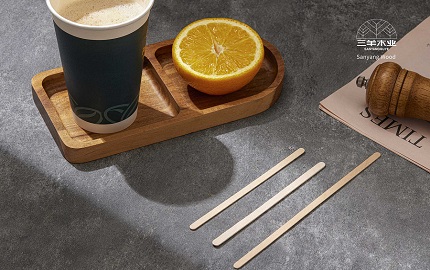
For global fast-casual chains, quick-service restaurants (QSRs), and corporate beverage brands, every milligram of food-contact material matters. When a customer stirs an 85°C espresso or a boiling-hot matcha latte, that 30-second interaction acts as a rigorous stress test for the utensil.
While the global shift away from single-use plastics is an absolute regulatory certainty, replacing them requires a deep understanding of material performance under extreme thermal stress. Temperature stability in premium wooden drink stirrers is not just an eco-friendly talking point—it is a critical engineering and safety requirement that directly impacts food compliance, operational efficiency, and taste integrity.
Wood is a natural, anisotropic material, meaning its physical and mechanical properties differ based on the direction of the grain. When standard wooden drink stirrers are submerged into a beverage exceeding 70°C, they undergo rapid thermal and moisture absorption.
If a manufacturer skips proper moisture management, the residual water trapped inside the cellular structure of the wood expands unevenly under high temperatures. This triggers rapid warping, bending, or micro-splintering during mid-stir.
True temperature stability requires deep-stage thermal conditioning during the manufacturing process. By subjecting raw timber to controlled kiln-drying, the core moisture content can be locked strictly between 8% and 12%. This molecular balance ensures that the organic fibers remain rigid, flat, and completely straight, even when subjected to near-boiling water extraction temperatures. Furthermore, high-temperature conditioning purges the natural volatile organic compounds (VOCs), resins, and saps native to the timber, rendering the final wooden drink stirrers entirely taste-neutral and odor-inert.
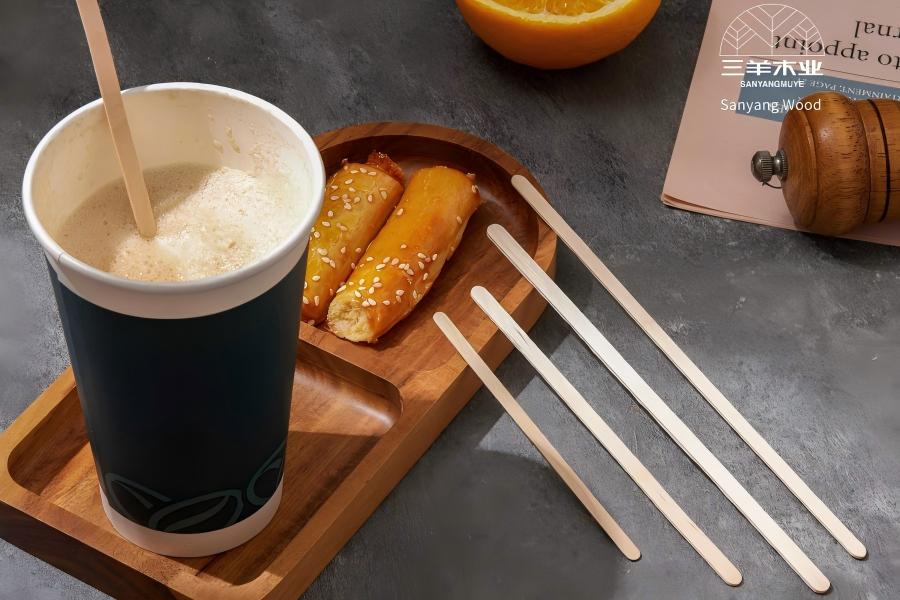
When evaluating food-contact utensils for high-heat environments, thermal stability directly correlates with chemical migration and physical health risks. High temperatures accelerate the kinetic energy of molecules, increasing the speed at which substances transfer from a utensil into a liquid—a process known as chemical leaching.
Low-quality or chemically bleached stirrers pose significant food safety hazards when exposed to hot liquids:
Chemical Migration: Utensils treated with chemical preservatives or artificial bleaching agents release toxic residues into the beverage at high temperatures, failing global food safety standards.
Physical Splintering: Unstable wood fibers degrade rapidly in boiling liquids, leading to micro-splintering. These tiny wood fragments can easily be ingested by consumers, causing throat irritation and severe customer complaints.
Astringent Aftertaste: Thermal instability causes the wood to release raw tannins, imparting a harsh, paper-like or cardboard aftertaste that completely ruins the sensory profile of premium coffee beans or specialty teas.
By choosing professionally manufactured, untreated wooden drink stirrers, brands guarantee zero harmful substance migration, protecting both their consumers and their legal compliance.
Maintaining structural integrity under mechanical force is essential for any high-volume beverage operation. Thicker syrups, heavy creams, and dense sugar granules require significant stirring force to dissolve completely. If a stir stick softens or flexes under this pressure, it fails its primary operational purpose.
High-quality manufacturing ensures that premium wood profiles maintain 100% of their mechanical density in liquids up to 100°C. Advanced manufacturing lines utilize multi-stage sanding and precise edge deburring to seal the outer fiber profiles.
For brands looking to elevate this touchpoint into a premium marketing asset, investing in [**custom wooden drink stirrers**](custom wooden drink stirrers) provides an excellent solution. High-quality custom branding—utilizing precision hot-stamping or laser engraving—requires a perfectly uniform, temperature-stable surface. When the wood fibers resist thermal expansion, your corporate logo, tagline, or QR code remains perfectly sharp, legible, and un-smudged, even when exposed to intense steam, heavy condensation, and continuous agitation.
To help procurement managers, supply chain directors, and compliance officers select the right configurations for their global operations, the following matrix compares how different materials perform under standard hot beverage serving conditions (Liquids at 75°C to 90°C):
| Material Type & Specification | Glass Transition / Deformation Point | Structural Rigidity (After 30s Hot Stirring) | Chemical Leaching Risk (At 85°C) | Ideal B2B Application Scenario |
|---|---|---|---|---|
| Commodity Plastic | ~70°C (Begins to soften) | Poor (Flexes and bends under mild pressure) | High Risk (Leaching of phthalates or BPA) | Restricted or banned in major global markets |
| Standard PLA (Bioplastic) | 55°C - 60°C (Melts rapidly) | Fails (Collapses and loses form entirely) | Low risk, but structurally unusable | Limited exclusively to iced teas and cold drinks |
| Paper / Compressed Cardboard | N/A (Absorbs liquid) | Soggy (Becomes pliable and loses torque) | Medium risk (Glue/adhesive dissolution) | Short-contact, low-viscosity light mixing |
| Premium Native Wood | Unaffected up to 120°C+ | Excellent (Maintains 100% stiffness) | Zero Risk (Naturally inert and chemical-free) | High-volume boiling coffee, tea, and thick syrups |
As the table demonstrates, standard plastic and PLA fail to withstand the basic temperatures of premium hot drink programs. High-density wooden drink stirrers represent the only cost-effective, drop-in replacement that eliminates plastic pollution without compromising mechanical performance.
To optimize your supply chain and maximize your return on investment (ROI), procurement teams should follow these technical selection guidelines:
Specify the Moisture Content: Always mandate a certified moisture range of 8% to 12% from your supplier to guarantee absolute resistance to warping.
Verify Processing Methods: Ensure your manufacturer uses high-temperature steam sterilization rather than chemical bleaching agents to achieve food-grade compliance.
Match Thickness to Beverage Viscosity: Standard applications can utilize a 2.0mm thickness, but heavy-duty drink programs involving dense syrups or honey should specify a 2.5mm to 3.0mm thickness to prevent snapping.
Incorporate Minimalist Custom Branding: When deploying custom wooden drink stirrers, keep logo designs clean and high-contrast. Test the stability of the marking method against hot steam to ensure your brand mark remains pristine at the moment of the first sip.
Enforce Dry Storage SOPs: Store your bulk inventory away from open dishwashers, steam lines, or high-humidity environments to prevent the wood fibers from absorbing ambient moisture before deployment.
As a global leader in sustainable food-grade utensil manufacturing, Henan Sanyang Wood Industry Co., Ltd. has pioneered the digital interconnection of bamboo and woodenware production since 1993. Operating a state-of-the-art facility covering over 50,000 square meters, Sanyang manages the complete, vertically integrated supply chain—from raw logs to final finished products.
With an annual output exceeding 10 billion pieces and advanced automated workshops featuring AI-driven visual intelligence selection, we eliminate structural defects, splinters, and dimensional inconsistencies before they ever reach your counters. Backed by an elite in-house R&D team, Sanyang provides the flawless technical precision required by the world's most demanding food and beverage brands.
Don't let a low-spec accessory compromise your premium beverage experience or invite single-use plastic compliance penalties. Whether you require standard wholesale bulk configurations or high-impact, precision-branded custom wooden drink stirrers to boost your social media visibility, our engineering team is ready to assist.
Explore our comprehensive manufacturing capabilities by browsing our sustainable product lines on our dedicated Products Page. By managing the complete supply chain from raw logs to final products, we ensure every batch meets strict food-grade standards and global environmental compliance. Once you have identified the ideal specifications for your specific hot drink volume and counter setup, contact us today to discuss your branding requirements, request a complimentary sample kit, or receive a direct factory-wholesale quotation!
In 2026, a stir stick is no longer an invisible accessory—it is a clear brand signal that tells consumers exactly how a company balances sustainability, safety, and quality. Choosing wooden drink stirrers with superior temperature stability protects your beverage formulas from chemical contamination, prevents operational failures on the bar counter, and guarantees a seamless consumer experience.
For forward-thinking chains, integrating custom wooden drink stirrers turns an everyday necessity into a powerful marketing touchpoint, driving brand alignment and securing consumer trust with every single hot pour.
This occurs because the wood was poorly processed, improperly dried, or exposed to high humidity during storage. When submerged in hot liquids, the wood releases natural volatile organic compounds (VOCs) and tannins. High-quality wooden drink stirrers undergo deep thermal conditioning and kiln-drying to remove these compounds, ensuring they remain entirely taste-neutral.
Yes, provided they are manufactured correctly. High-quality custom wooden drink stirrers utilize inkless hot-stamping or precise laser engraving. Because these methods alter the physical structure of the wood fibers rather than applying a loose surface ink, the branding remains perfectly crisp and legible even when exposed to 90°C steam and liquids.
Standard PLA has a very low glass transition temperature, typically between 55°C and 60°C. Because commercial hot coffee and tea are served between 75°C and 85°C, a PLA stirrer will instantly soften, warp, and lose all structural rigidity, making it completely unusable for hot drink mixing.
The industry standard for premium, warp-resistant woodenware is a core moisture content strictly between 8% and 12%. Keeping the moisture within this narrow window prevents the wood fibers from absorbing excess hot liquid or expanding unevenly, which eliminates the risk of bending and cracking during use.