What are you looking for?
×

The restaurant industry has undergone a massive structural shift, driven by the explosive growth of delivery-only dining models and high-end ghost kitchens. Unlike traditional dine-in establishments where custom lighting, sophisticated interior design, and attentive table service shape consumer perception, ghost kitchens operate within a strict physical limitation. For a delivery-only brand, the entire culinary reputation and dining experience must be compressed into a single cardboard delivery box.
When a consumer orders a premium, high-end meal to their home or office, every single element enclosed in that delivery package dictates the perceived value of the meal. Yet, many upscale ghost kitchens still make the critical mistake of pairing chef-curated cuisine with flimsy, unstable plastic utensils or generic alternatives.
To bridge this experiential gap and comply with rapidly evolving global environmental regulations, elite food delivery operators are upgrading to premium wooden takeaway cutlery. This transition is no longer just a trend—it is a strategic business decision that protects brand prestige, enhances customer satisfaction, and drives higher ticket prices.
Operating a premium ghost kitchen model comes with unique logistical and presentation hurdles. When food leaves a centralized commercial kitchen facility, it undergoes a transit period that heavily impacts temperature, moisture, and structural form.
The most glaring challenge for upscale delivery brands is the immediate drop in customer experience (UX) when a high-ticket meal arrives accompanied by cheap, mass-produced disposable utensils. When a customer pays a premium price for gourmet ingredients, encountering a plastic fork that bends under pressure or a paper spoon that softens instantly destroys the premium illusion.
High-end takeout packaging must seal in heat, which inadvertently creates a high-humidity environment inside the delivery container. Standard plastic and low-grade bio-plastic utensils often lose structural rigidness when trapped alongside hot, steaming entrees. Furthermore, conventional plastics run the risk of chemical migration under high thermal stress, potentially leaching microplastics or artificial odors directly into premium food.
Governments worldwide are accelerating single-use plastic bans, creating massive compliance headaches for multi-location ghost kitchen brands and delivery aggregates. Operators must pivot toward entirely plant-based, compostable-compatible alternatives without losing the essential strength required for upscale food consumption.
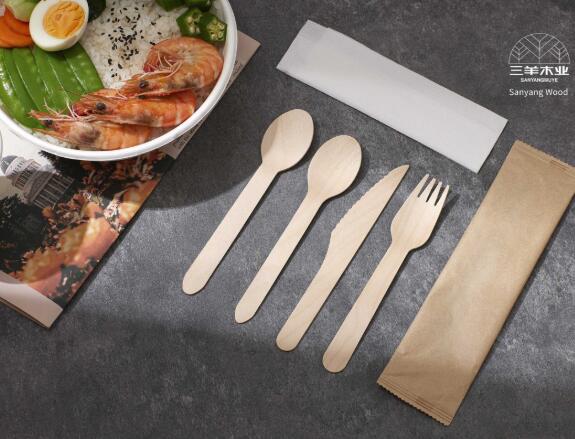
The first physical touchpoint a customer encounters before tasting a delivery meal is the utensil pack. Upgrading to high-end wooden takeaway cutlery fundamentally alters the tactile and psychological perception of the delivery brand.
Wood provides an immediate weight, natural texture, and aesthetic sophistication that synthetic materials simply cannot replicate. A smooth, beautifully finished wooden utensil signals to the consumer that the culinary brand cares deeply about every granular detail of their dining journey. It matches the visual appeal of organic, artisanal ingredients, transforming a simple takeout order into a luxury home-dining event.
Unlike chemical-based synthetics or metals, premium native wood fiber is entirely inert. It does not conduct heat, nor does it interact with food acids or high temperatures. This ensures that the intricate, chef-designed flavor profiles of your sauces, proteins, and sides remain completely unaltered, guaranteeing an authentic restaurant-quality meal with zero chemical aftertaste.
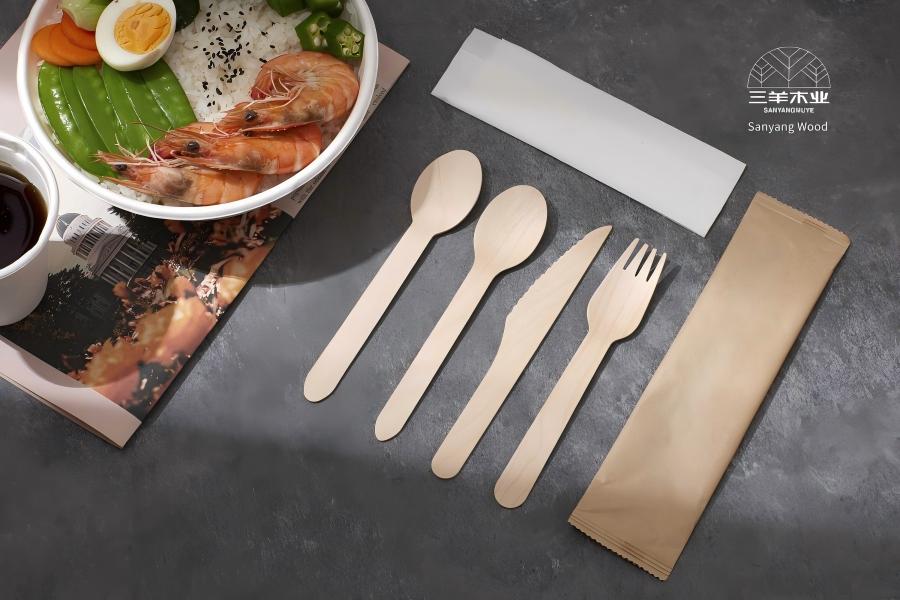
Procuring utensils without understanding their core engineering parameters can lead to significant operational issues, such as broken tines or splintered surfaces. To help delivery brands optimize their procurement strategies, the following matrix outlines the necessary performance benchmarks required for commercial food service:
| Utensil Specification | Minimum Performance Benchmark | Operational Impact on Takeout |
|---|---|---|
| Moisture Content | Strictly locked between 8% and 12% | Prevents warping, bending, and cracking inside high-humidity steam boxes |
| Surface Finish | Multi-stage sanding & mechanical deburring | Eliminates all splinter risks; ensures a smooth, luxurious hand-feel |
| Tine Strength | High-density compressed fiber profile | Resists breaking under heavy mechanical stirring or cutting pressure |
| Packaging Formats | Sealed, individually wrapped kits | Guarantees hygiene compliance and seamless takeout kit assembly |
Partnering with an experienced, technologically advanced wooden cutlery manufacturer ensures that every batch delivered to your ghost kitchen facilities meets these precise mechanical standards consistently, eliminating food service friction and reducing customer complaints.
Modern consumers—particularly those ordering from premium culinary brands—demand high environmental accountability from their favorite restaurants. High-end eco-friendly packaging is no longer a niche preference; it is a baseline expectation that influences where consumers spend their food budgets.
Natural wooden takeaway cutlery represents the ultimate gold standard for circular economy principles. Derived from responsibly managed, renewable forests, high-grade wood utensils are 100% biodegradable and home-compostable compatible. They degrade naturally without requiring specialized industrial composting facilities, a critical limitation that renders many bioplastics (like PLA) ineffective in standard municipal waste systems.
By replacing "invisible plastics" with visible, plant-based materials, ghost kitchen operators send a powerful, clear signal regarding their long-term commitment to a green, sustainable future, fully insulating their brand against single-use plastic regulatory exposure.
Integrating premium woodenware into your food delivery system is a proven method for increasing customer lifetime value (CLV) and boosting corporate revenue.
In the modern food delivery space, unboxing videos and social media photographs heavily dictate brand growth. A beautifully curated delivery box fitted with branded, ultra-smooth wooden knives, forks, and spoons creates an "Instagram-worthy" moment. Customers are significantly more likely to photograph, share, and review a meal positively when the presentation feels cohesive and luxurious, driving organic brand visibility.
Consumers are inherently willing to pay a higher delivery or packaging fee when they perceive clear, premium value in the packaging itself. Upgrading your accessory game allows ghost kitchens to comfortably justify premium menu pricing, effectively offsetting the minor marginal cost difference over commodity plastics while yielding substantial returns in brand equity.
As a premier global wooden cutlery manufacturer, Henan Sanyang Wood Industry Co., Ltd. has driven digital transformation and technological innovation in food-grade woodenware since 1993. Spanning an expansive manufacturing area of over 50,000 square meters, Sanyang runs a vertically integrated operation managing the entire production chain from raw logs to final premium finished products.
Utilizing advanced automated workshops, special cutlery production lines, and AI-driven visual intelligence selection, we eliminate structural defects, dimensional inconsistencies, and splinter risks at scale. With an annual output capacity in the billions and an elite in-house R&D team, Sanyang provides the stable supply chain, strict international compliance, and absolute structural precision required by the world's most prominent food service chains, ghost kitchen networks, and premium hospitality brands.
Don't let subpar delivery accessories dilute the value of your gourmet culinary creations. Whether your network requires high-volume, individually wrapped wholesale shipments or tailored technical advice for high-humidity automated packaging lines, our expert team is ready to scale with you.
Explore our comprehensive engineering solutions and browse our full catalog of sustainable food service items on our Products Catalog Page. For direct factory-wholesale inquiries, custom specifications, or to arrange a pilot order for your ghost kitchen network, please visit our Contact Portal to receive a tailored quotation today!
In the competitive landscape of delivery-first dining, high-end ghost kitchens cannot afford to overlook their final physical touchpoint. Premium wooden takeaway cutlery removes the plastic perception entirely, protects food flavor integrity, and elevates a standard meal delivery into a memorable brand experience. By aligning your premium culinary concepts with sustainably sourced, flawlessly engineered woodenware, your brand can cultivate deep customer loyalty, secure positive social proof, and drive sustainable long-term revenue growth.
Yes, provided they are engineered correctly. Premium wooden cutlery utilizes high-density, slow-grown wood fibers that undergo multi-stage mechanical compression. This process guarantees excellent structural rigidity and tine strength, allowing the utensils to cut through heavy proteins and mix dense sauces without flexing or snapping.
Top-tier manufacturers utilize multi-stage sanding techniques and advanced edge-deburring machinery. Additionally, integrated AI-driven visual selection systems scan the production line in real-time to instantly detect and remove any pieces with micro-cracks or raised fibers, ensuring a perfectly smooth texture.
Standard PLA bioplastics suffer from a low deformation threshold, softening rapidly at temperatures between 55°C and 60°C. Delivery steam boxes frequently exceed these temperatures, causing PLA to warp. Furthermore, PLA requires highly specific industrial composting facilities to degrade, whereas natural wood is completely home-compostable.
To maintain absolute structural integrity, wooden utensils must be stored in a dry environment away from active dishwashers, boiling lines, or open steam tables. Keeping the inventory in its original sealed boxes until deployment ensures the wood maintains its optimal moisture balance of 8% to 12%.