What are you looking for?
×

Nobody photographs the spoon. Until it snaps in a pint of hard-frozen gelato, leaves a splinter on someone's lip, or shows up in a TikTok captioned "why is this plastic?"—and then it's all anyone talks about.
In 2026, the pressure on ice cream brands, dessert shops, and foodservice distributors to eliminate plastic from every customer touchpoint has moved from voluntary to expected. Regulations are tightening. Retail buyers are asking for documentation. Consumers are calling out "unnecessary plastic" in reviews and on social media. The plastic scoop that was invisible for decades is now a liability.
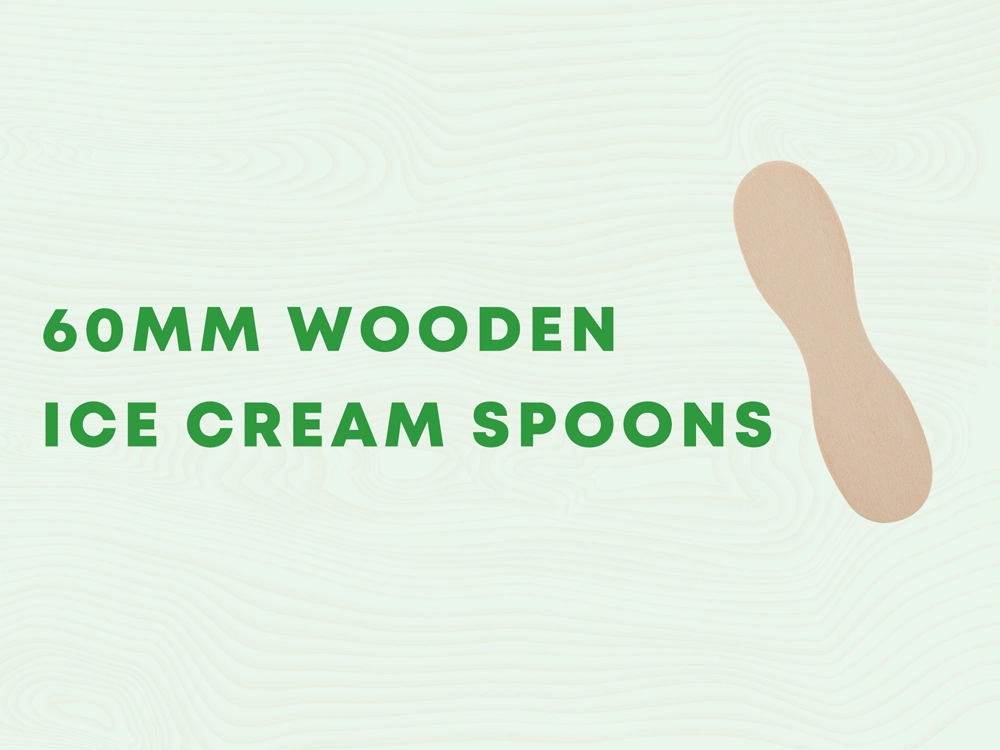
Wooden ice cream spoons solve the compliance and sustainability problem—but only when they are specified correctly for frozen product performance: no splinters, minimal wood taste, smooth lip contact, and enough structural rigidity to handle hard ice cream without flexing or snapping. And for brands that want to turn a disposable item into a brand moment, personalized wooden ice cream spoons add a customization layer that reinforces premium positioning without reintroducing plastic into the packaging story.
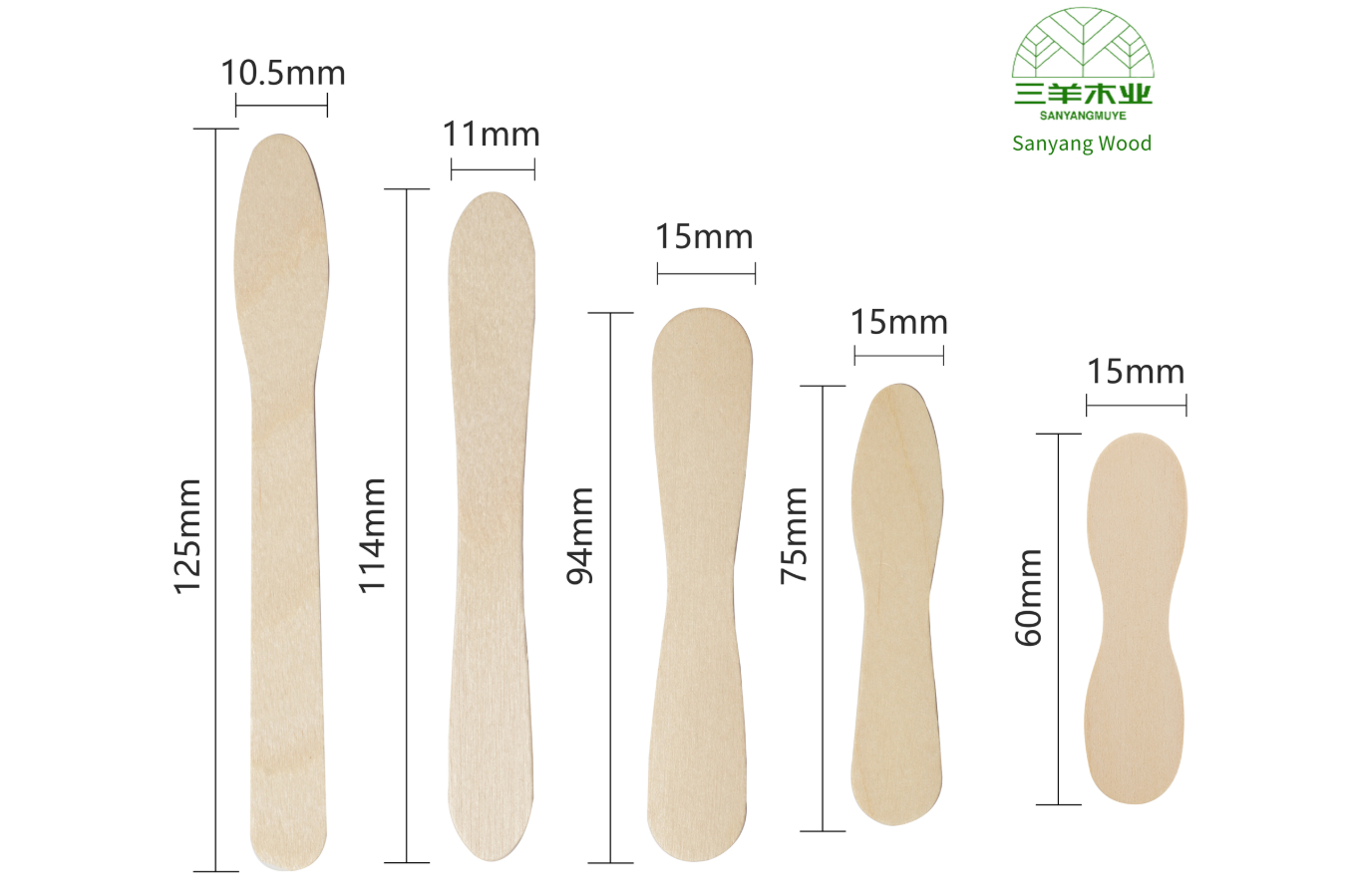
The structural logic of wooden ice cream spoons in frozen dessert applications comes down to fiber density and dimensional stability at low temperatures:
Rigid fiber structure: dense wood grain provides stable scoop control at freezer temperatures, where many plastics become brittle and paper alternatives lose structural integrity from condensation
Thermal neutrality: wood does not conduct cold the way metal does, and does not feel artificially warm the way some bioplastics do—the tactile experience is neutral and natural
Controlled finishing: properly dried and multi-stage sanded wood reduces raised grain and surface roughness, which is the primary driver of the "dry wood" sensation that customers describe as uncomfortable
| Problem with Plastic | How Wooden Ice Cream Spoons Address It |
|---|---|
| Regulatory exposure | Plant-based, compostable-compatible material removes single-use plastic classification in most markets |
| Consumer perception | Natural material story aligns with artisanal, clean-label, and premium positioning |
| Brand audit risk | Documented food-contact wood processing supports ESG and retail buyer requirements |
| Brittleness at low temperature | Dense wood grain maintains structural integrity in frozen product |
Before specifying wooden ice cream spoons, define the customer experience requirements that will determine whether the switch is perceived as an upgrade or a downgrade:
Smooth edges with no splinter risk on tines, bowl rim, or handle
Low odor and taste neutrality—no woody or chemical aftertaste that competes with the dessert flavor
Comfortable lip contact on the bowl edge—the most sensitive contact point in spoon use
Sufficient rigidity to scoop without flexing under the force required for your hardest product
Specifying wooden ice cream spoons as "wooden, food grade" without defining performance parameters produces the most common procurement failure in this category: spoons that pass a visual inspection but fail in service.
| Application | Recommended Geometry |
|---|---|
| Tasting portions / sampling | Short length (80–100mm), shallow bowl, fine tip for small bites |
| Standard cup service | Medium length (110–130mm), medium bowl depth |
| Pint / take-home retail | Longer handle (130–150mm), deeper bowl for self-service |
| Hard ice cream / gelato | Wider, thicker bowl profile for scoop force distribution |
| Soft serve / frozen yogurt | Thinner bowl edge for cleaner contact with softer product |
Tip profile matters for harder products: a slightly tapered, reinforced tip penetrates hard ice cream without the spoon flexing at the bowl-handle junction—the most common failure point.
Thickness: the minimum thickness at the bowl-handle junction determines break resistance; under-specifying thickness for hard ice cream is the most common cause of in-service snapping
Surface smoothness: specify multi-stage sanding to a defined finish level—not just "smooth"; single-stage sanding leaves micro-texture that customers feel as rough, especially on lip contact
Edge finishing: bowl rim and handle edges require specific deburring attention; these are the contact points where splinter risk is highest
Wood taste in a spoon is a processing and storage issue, not an inherent material property. Properly processed and stored wooden ice cream spoons should be taste-neutral. Specify:
Clean processing without chemical treatments that transfer taste
Moisture content at delivery within a defined range
Dry storage requirements to prevent grain raising and odor development before use
Bulk: for in-store dispensers and high-volume service operations
Individually wrapped: for delivery, retail packs, and hygiene-sensitive applications
Retail-ready packs: for inclusion in pint multipacks or meal kit formats
Personalized wooden ice cream spoons add a brand layer to a functional item without reintroducing plastic or synthetic materials:
Logo printing: brand mark on the handle—visible before and during use
Text customization: flavor name, campaign message, seasonal greeting, or QR code
Private-label packs: branded outer packaging for retail distribution
Seasonal and limited-edition messaging: campaign-specific printing for Valentine's Day, summer launches, or festival events
The moment of eating ice cream is a high-engagement brand touchpoint. A personalized wooden ice cream spoon extends the brand experience through the entire consumption moment:
Reinforces premium positioning at the exact moment the customer is most engaged with the product
Creates a natural social sharing prompt—a branded wooden spoon in a gelato cup photographs better than a generic plastic one
Differentiates the brand in a category where the product itself is often visually similar across competitors
Keep print areas on the handle, away from the bowl and lip-contact zones, unless food-safe inks are confirmed
Test print readability after cold handling and condensation exposure—moisture can affect ink adhesion on wood surfaces
Confirm minimum order quantities for personalized runs against your volume requirements before committing to a design
As illustrated below, wooden ice cream spoons go through a precise production process: shaping, drying, sanding, and quality control, with an optional printing/personalization step for branded or custom orders, followed by packaging for delivery. Every stage is carefully managed to ensure a consistent, high-quality finish suitable for commercial use.
Wood selection
        ↓
Cutting & shaping (spoon geometry)
        ↓
Drying & moisture control
        ↓
Multi-stage sanding (smooth edges)
        ↓
Quality checks (splinters, thickness, finish)
        ↓
Optional personalization (logo / text)
        ↓
Packaging (bulk or wrapped)
        ↓
Delivery to shops / brands
Daily service, tasting flights, and add-on topping portions require spoons that perform consistently across a full service day. Wooden ice cream spoons in bulk dispensers provide a natural, premium-aligned alternative to plastic picks that supports the artisanal positioning most gelato and specialty ice cream brands are building.
Priority specs: smooth finish for high-frequency lip contact, appropriate bowl depth for tasting vs full-serve portions, bulk packaging for dispenser use.
Consistent pack-out and easy customer handling are the operational requirements. The spoon must perform in a sealed cup that may sit in a delivery bag for 20–30 minutes before consumption—which means condensation resistance and structural integrity at varying temperatures.
Priority specs: individually wrapped for hygiene, sufficient thickness for hard-frozen product, taste neutrality after extended packaging contact.
An included spoon in a retail pint is a brand decision as much as a functional one. Personalized wooden ice cream spoons in retail packaging reinforce the sustainable positioning on shelf and create a differentiated unboxing moment for premium brands.
Priority specs: retail-ready packaging, personalization capability, dimensional consistency for automated inclusion in pint packaging lines.
High-volume distribution with simple cleanup. The sustainability story is easy to communicate to event clients and venue operators. Consistent appearance across thousands of covers requires dimensional and finish consistency across large lot sizes.
Priority specs: bulk packaging for cost efficiency, dimensional consistency across the full order quantity, strength grade matched to the hardest product being served.
Switching to wooden ice cream spoons from plastic does not require equipment changes or process redesign. For most operations, it is a direct SKU substitution with two operational updates:
Storage SOP: keep dry; humidity causes grain raising that degrades the finish quality and increases splinter risk
SKU mapping: define which spoon size and strength grade applies to which product and serving format
Confirm serving format and ice cream hardness: hard-frozen requires thicker bowl profile and reinforced tip; soft serve and frozen yogurt allow thinner, more delicate geometry
Choose size and thickness: match length to serving format; confirm minimum thickness at the bowl-handle junction for your hardest product
Decide packaging format: bulk for in-store dispensers; individually wrapped for delivery and retail; branded packs for personalized wooden ice cream spoons programs
Define personalization requirements: logo, text, seasonal messaging, minimum order quantity
Run a pilot: measure break rate per 1,000 servings, mouthfeel feedback, and customer complaint mentions before full rollout; lock the spec and QC acceptance criteria for repeat orders
| TCO Factor | Consideration |
|---|---|
| Unit price | Premium finish commands a modest premium over commodity plastic |
| Break rate reduction | Fewer in-service snaps reduces waste and customer complaint events |
| Complaint reduction | Fewer splinter and taste complaints reduces brand management cost |
| Compliance value | Removes single-use plastic exposure in regulated markets |
| Brand value | Personalization and natural material story supports premium price positioning |
| Storage cost | Dry storage requirement is simple but must be defined in receiving SOP |
Practical KPIs to track after switching:
Break rate per 1,000 servings (establish baseline in pilot, then reduce)
Splinter or taste complaint mentions per 1,000 orders
Review score change for delivery platform ratings
Compliance audit outcomes related to single-use plastic
Replacing plastic scoops in 2026 is not just a materials decision—it is a brand and compliance decision that affects every customer interaction with your frozen dessert product. Wooden ice cream spoons offer a compostable-compatible direction with a premium tactile feel, provided the specification covers the performance requirements of frozen product service: rigidity, smoothness, taste neutrality, and structural integrity at low temperatures.
For brands that want to go further, personalized wooden ice cream spoons convert a functional disposable into a brand touchpoint—reinforcing premium positioning at the moment of consumption without adding plastic back into the packaging story.
Visit the product page and submit your requirements to receive a recommended specification and quotation:
View wooden ice cream spoon options and request a quote
To receive an accurate recommendation, submit the following:
Work conditions: product type (hard ice cream / gelato / soft serve), serving temperature, hardness level, condensation exposure, wrapped or bulk
Quantity: monthly demand and peak season volume
Size and spec: length, thickness, spoon bowl shape, packaging type, personalization requirements
Target metrics: break rate target, smoothness requirement, taste and odor requirement
Current problems: spoon bending, splinters, strong wood taste, printing rub-off, supply instability
Q1: What are wooden ice cream spoons?
Wooden ice cream spoons are disposable spoons made from food-contact wood, designed for serving and eating frozen desserts including ice cream, gelato, and frozen yogurt. They are produced through a controlled forming and finishing process that includes shaping, drying, multi-stage sanding, and quality inspection to ensure smooth edges, structural rigidity at low temperatures, and taste neutrality. They are available in standard and personalized configurations for in-store, delivery, retail, and catering applications.
Q2: How do wooden ice cream spoons compare with plastic, PLA/CPLA, or paper spoons?
Wooden ice cream spoons typically deliver better rigidity than paper options, which can soften from condensation in frozen dessert applications. Compared with PLA and CPLA bioplastics, wood offers a more natural tactile feel and a simpler anti-plastic messaging story—PLA is still perceived as plastic by many consumers and faces composting infrastructure limitations in most markets. Compared with standard plastic, wood removes the single-use plastic regulatory exposure and consumer perception problem while maintaining the structural performance needed for frozen product service, provided thickness and finish are correctly specified.
Q3: What ROI can we expect when replacing plastic scoops with wooden ice cream spoons?
ROI from switching to wooden ice cream spoons is typically driven by three sources: reduced brand risk from plastic-related complaints and regulatory exposure; improved customer sentiment from better tactile quality and natural material positioning; and reduced replacement and re-issue costs from fewer in-service failures. The most reliable way to quantify ROI is a 30–60 day pilot measuring break rate per 1,000 servings, complaint mentions in delivery platform reviews, and re-issue frequency. Most operations see measurable improvement within the first full service month after spec standardization.
Q4: Do we need to modify our serving process or packaging line to switch?
No equipment changes are required. Wooden ice cream spoons are a drop-in replacement for plastic scoops in virtually all frozen dessert service formats. The only adjustments needed are storage SOP updates (keep dry to prevent grain raising), SKU mapping updates (which spoon size and strength grade applies to which product), and packaging adjustments if switching from bulk to individually wrapped or adding personalized wooden ice cream spoons to the program.
Q5: What parameters should we provide for correct selection and quoting?
To receive an accurate configuration recommendation and quotation, provide: dessert type and hardness level (hard-frozen / gelato / soft serve), serving size and format (tasting / cup / pint), preferred spoon dimensions (length and thickness), smoothness and taste neutrality expectations, packaging format (bulk / individually wrapped / retail-ready), whether personalized wooden ice cream spoons are required and if so the design brief and minimum order quantity, monthly volume and peak season demand, and any compliance or documentation requirements for your market.